

The contract is signed. For many companies, that means the position is filled. For the new hire, the most uncertain phase is only just beginning.
In the DACH region (Germany, Austria and Switzerland), one to three months often pass between the offer acceptance and the first working day. The person is still working for their current employer, having farewell conversations, handing over tasks and perhaps receiving a counter-offer. Meanwhile, they hear nothing from their future employer for weeks. The next message arrives with a request to fill in seven forms.
This is the period that decides how someone feels when they walk through the door on day one. And sometimes it decides whether they turn up at all.
First things first: preboarding is not a welcome programme with goodies. It is the reliable continuation of recruiting up to the first working day: with a contact person, clear information and a workstation that works on day one.
Contents
- The forgotten phase between offer and start
- What can be lost during this time
- Six building blocks for good preboarding
- The timeline from offer acceptance to day one
- Three common mistakes
- Data protection: data only when it is needed
- What preboarding can and cannot do
- How Aiploya supports the transition
- FAQ and conclusion
The forgotten phase between offer and start
In most companies, recruiting is clearly organised. There are people in charge, appointments, interview guides and, at the end, a decision. Onboarding from day one often has a plan as well. In between lies a phase that nobody feels responsible for.
The recruiter has ticked off the vacancy and moved on to the next ones. The line manager plans the start "in good time beforehand". IT finds out about the new hire when the ticket arrives. And the new hire waits.
How long this phase lasts depends mainly on the notice periods at the current employer. A brief overview of the basic statutory rules:
- Germany: under Section 622 of the BGB (German Civil Code), employees can give notice with a basic period of four weeks to the fifteenth or to the end of a calendar month. Employment contracts and collective agreements frequently provide for longer periods.
- Austria: under Section 20 of the Angestelltengesetz (Austrian Salaried Employees Act), salaried employees give one month's notice to the last day of a month, unless a more favourable arrangement applies. The period can be extended contractually to up to six months.
- Switzerland: under Art. 335c OR (Swiss Code of Obligations), after the probationary period the notice period is one month in the first year of service, two months from the second to the ninth year and three months thereafter, in each case to the end of a month.
For experienced specialists and managers with contractually extended periods, three months or more is not unusual. Anyone who has to give notice to the end of a month and receives the offer mid-month loses additional time. In this situation, twelve weeks of radio silence are quickly reached.
These notes only reflect the basic statutory notice periods. What counts is always the specific contract and any applicable collective or collective labour agreements. They are no substitute for legal advice.
What can be lost during this time
The most obvious danger is a dropout before the start. The Haufe onboarding survey from January 2024 questioned 755 HR managers, line managers, HR administrators and recruiters. 36 per cent said they experience resignations between contract signing and the first working day: 27 per cent in general, a further 9 per cent for certain positions.
Important for context: the figure describes how many respondents know the phenomenon from their own company. It does not say that one in three new hires drops out. But it does show that no-shows are not an exotic one-off.
According to SHRM, an international Gartner survey of almost 3,500 candidates between May 2022 and May 2023 found that half had backed out of an offer they had already accepted and started elsewhere. The study does not break the results down by country and cannot be transferred one-to-one to the DACH region. The direction is clear nonetheless: a signature is an interim status, not a guarantee.
Besides a complete loss, there are quieter losses:
- Counter-offers: the current employer only learns that it is losing someone when notice is given. If it then tempts them with a higher salary or a new role, it meets a person who has heard nothing from the new employer for weeks.
- Ongoing applications: many candidates had other processes running in parallel. A later invitation reaches someone who has not yet arrived emotionally.
- Doubts: without contact, the person fills the gap with assumptions. A headline about the company, a rumour from their network or a critical online review then carries more weight than it should.
- A weak first impression: even those who do turn up start differently if there is no laptop waiting on day one and nobody knows who is collecting them.
The Haufe survey names false expectations on the part of new employees as the most common reason for early turnover (56 per cent). Preboarding is one of the few phases in which such expectations can still be clarified before the first working day.
Many companies now know that a slow selection process costs them good candidates (see the detailed article: Why slow recruiting loses good candidates). The same logic applies after the offer. Going quiet after the signature prolongs the very uncertainty that the process has just reduced.
Six building blocks for good preboarding
Good preboarding needs neither a software project nor a big budget. It needs six things that happen reliably.
1. A dedicated contact person: the new hire knows whom to turn to, and that person replies. It can be the line manager, an HR contact or a buddy from the team. What matters is a name with a phone number rather than a shared inbox.
2. The key information at the right time: when and where does the first day start? Who will meet me? What do I need? How does the first week work? How do working hours, remote work and parking work? Short answers to these questions remove more uncertainty than a long corporate brochure.
3. Equipment and access ready: laptop, phone, user account, email address, access card, tools or protective clothing are there on day one. It sounds trivial, but it is the point at which new employees see most clearly whether they were expected.
4. Contact with the team: a short video call with the team, an invitation to lunch or to a team event before the start. Voluntary and without pressure. Anyone who already knows two faces on day one arrives differently.
5. Clear first tasks: before the start, the line manager knows what the new hire will work on in the first few weeks and tells them. Not as a work assignment before the contract begins, but as orientation: this is what awaits you, this is what we are looking forward to.
6. A thoughtful welcome pack: a handwritten note from the line manager, a book on the subject area or something from the company's own production feels more personal than a box of logo merchandise. The pack does not replace any of the other five building blocks.
An example of what this can look like in a mid-sized business: a machine builder with 300 employees hires a design engineer with a three-month notice period. The team lead calls one week after the signature, discusses open questions and says when they will be in touch again. After six weeks comes an invitation to the summer party. Two weeks before the start, the design engineer receives the schedule for the first week, her first two projects and the name of her buddy. The effort for the company: a few hours, spread over three months.
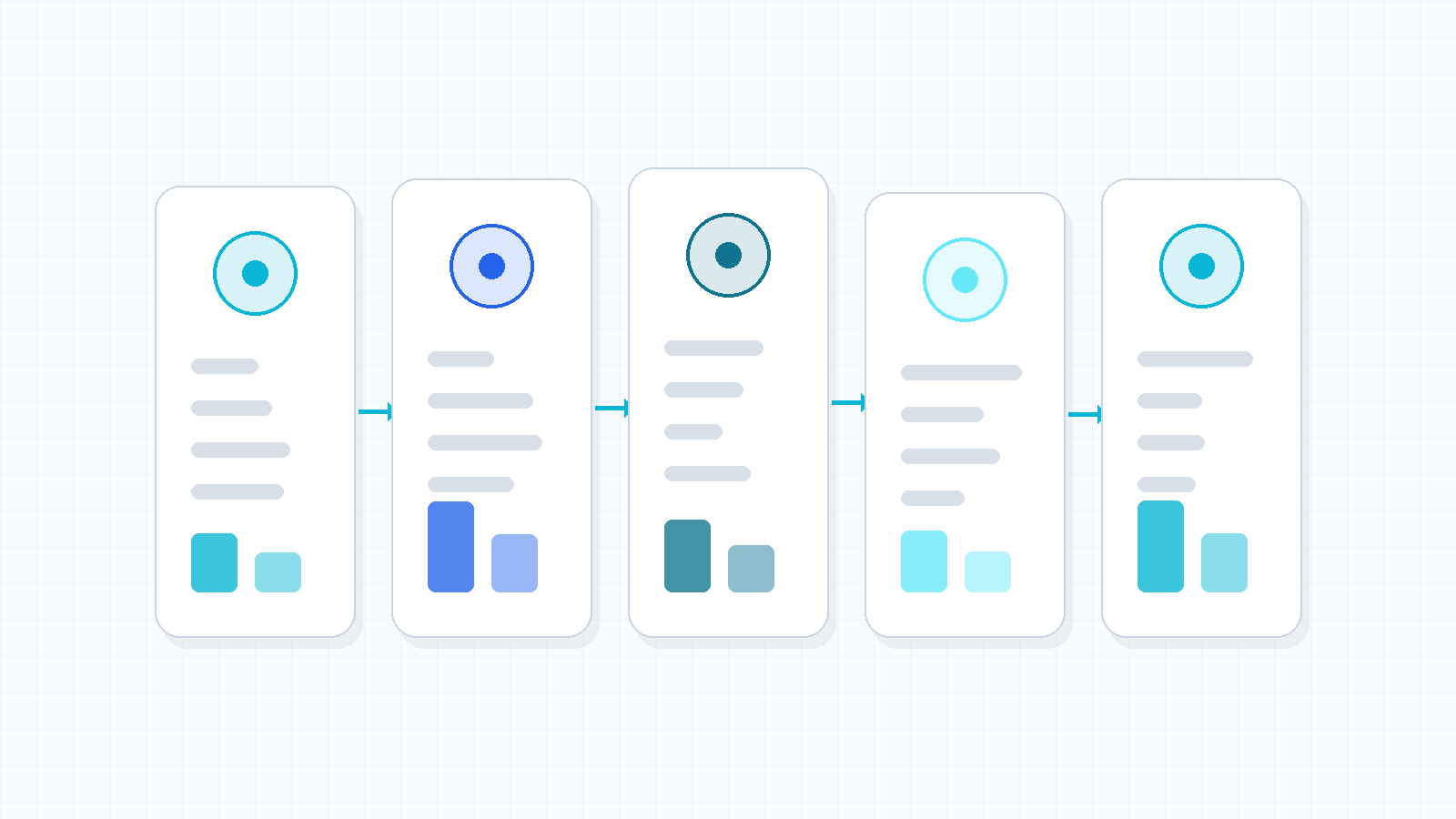
The timeline from offer acceptance to day one
The following timeline works for most roles with a notice period of one to three months. With short notice periods the steps move closer together; with long ones, one or two extra touchpoints are added.
| When | What happens | Responsible |
|---|---|---|
| Offer acceptance (within 1 to 3 days) | Personal call from the line manager, written confirmation, name of the contact person, next steps and a rough timeline up to the start. | Line manager, HR |
| Shortly afterwards | Request the contract documents and only the data needed for the contract and the start. Order hardware, workstation and accounts internally. | HR, IT, facilities |
| During the notice period | A short contact roughly every two to four weeks: news from the team, an invitation to an optional event, room for questions. | Contact person |
| −4 weeks | Share the schedule for the first week, name a buddy, offer an optional get-to-know with the team. Check that orders for equipment and gear are on their way. | Line manager, HR |
| −1 week | Concrete information about the first day: time, address, contact at reception, parking or travel. Outline first tasks. Test access. | Line manager, IT |
| Day 1 | Personal welcome, a working workstation, lunch with the team, a conversation about goals and the plan for the first weeks. | Line manager, buddy |
The most important entry is at the very top. The call after the offer acceptance sets the tone for everything that follows. It takes ten minutes and says: we are delighted, and you will hear from us.
It helps to store the timeline as a fixed checklist in the recruiting or HR system. Then good preboarding does not depend on whether a committed manager remembers it.
Three common mistakes
Mistake 1: Radio silence
The most common mistake is the least conspicuous. After the signature, simply nothing happens. Nobody intends it. Everyone is busy, and the start is still a long way off.
For the new hire, silence feels different. They wonder whether the job still looks as discussed, whether the manager is still there and whether they made the right decision. A counter-offer reaches them in exactly this mood.
The solution is not a newsletter. A few personal contacts at an agreed rhythm are enough. What matters is keeping the contacts you have announced.
Mistake 2: A flood of forms
The opposite of radio silence is the data pile. Personnel questionnaire, tax details, bank details, social security, emergency contact, photo consent, IT policy and code of conduct arrive bundled in one email, with a deadline of Friday.
The message is unintentionally clear: you are now an administrative case. On top of that, much of this information is not even needed at this point. Bundle what is genuinely required before the start and collect the rest on the first day or in the first week. Where possible, replace paper with a simple, secure form.
Mistake 3: Too many mandatory activities before the start
Some companies mean particularly well and move parts of the induction to before the first day: e-learning, compliance training, reading material on processes, attending meetings.
At this point, however, the new hire is still working for their current employer and remains bound by obligations to it. Mandatory tasks before the contract begins are therefore not only impolite; they can also raise employment law questions, for example about pay and insurance cover. Keep everything before the start voluntary and small. An offer that can be declined without fear of making a bad impression is a genuine offer.
Data protection: data only when it is needed
With the offer acceptance, the person changes from applicant to future employee. This also changes what data the company needs. The temptation to collect everything at once is great. The GDPR counters this with a clear principle: personal data should be limited to what is necessary for the purpose (data minimisation, Art. 5(1)(c) GDPR). In Switzerland, under Art. 328b OR, employers may only process data insofar as it concerns suitability for the employment relationship or is necessary for performing the employment contract.
In practice, this means for preboarding:
- Check the timing: bank and tax details are needed for the first payroll run, not three months beforehand. Request them when payroll is being prepared.
- Clarify the purpose: clothing size for workwear makes sense. Hobbies and marital status for a welcome poster do not, unless the person wishes to share them voluntarily.
- Take voluntariness seriously: a photo and short introduction on the intranet or in a team channel only with consent and with a real option to say no.
- Transfer securely: no copies of ID documents or social security numbers by unencrypted email. Use a protected form or portal.
- Sort application data: not everything from the selection process belongs in the personnel file. Interview notes and other candidates' documents have no place there.
- Grant access in stages: a user account can be prepared without giving access to internal systems before the contract begins.
Here, data protection is not an obstacle but a mark of quality. Asking only for what you really need, and explaining why, shows respect. Agree the specific arrangements with your data protection officer and, where applicable, the works council. This section is not legal advice.
What preboarding can and cannot do
Preboarding ensures that a good decision lands well. It keeps in touch, answers questions, prepares the workstation and team and clarifies expectations for the first few weeks.
What it cannot do is correct a selection decision after the fact. If the role and the person fundamentally do not fit, even the best welcome call will not change that. Why the same applies to induction from day one is explained in the article Why onboarding cannot fix a bad hire.
Preboarding does, however, have one strength that no later phase has: it can correct a false picture before the start. If the new hire realises in a conversation with the team that their idea of the role is wrong, that is uncomfortable. But it is better than discovering it in week four. So use the contacts for honest answers too, not just for a good atmosphere.
Rule of thumb: preboarding does not sell the job a second time. It makes it tangible, so that no surprises are waiting on day one.
How Aiploya supports the transition
Aiploya is a recruiting and job platform for the DACH region with job posting, applicant management and AI-supported matching between skills and roles. Competency profiles make visible which skills a person brings and where there is still room to learn.
For preboarding, this is more than a side effect. If the selection process has recorded in a structured way which requirements are clearly met and which skills still need to develop, the first tasks and learning steps can be planned in a more targeted way. The Learning Compass helps to find suitable development paths for these gaps.
This way, recruiting does not become a closed case but a transparent basis for the start. People continue to make the decisions.
Frequently asked questions
Who should keep in touch during preboarding?
Ideally the future line manager, supported by HR. What matters is a clearly named person who is reachable and gets in touch at an agreed rhythm.
How often should you get in touch during the notice period?
As a guide, every two to four weeks, briefly and personally. More often quickly becomes intrusive; less often feels like radio silence.
Can new employees be invited to meetings or training before they start?
Invitations are possible, but they should be voluntary and must not clash with work for the current employer. Mandatory tasks before the contract begins raise employment law questions and should be avoided. If in doubt, seek legal advice.
Is preboarding worthwhile even with short notice periods?
Yes, just in a more compact form. Even with two weeks until the start, you need a call after the offer acceptance, clear information about the first day and a working workstation.
What should you do if the new hire mentions a counter-offer?
Ask openly what matters to them and answer honestly. Renegotiating out of panic rarely creates a sound basis. A good conversation about the role, the team and future prospects is often more convincing.
Conclusion: the offer acceptance is the beginning, not the end
For companies, the search ends with the signature. For the new hire, a period between two employers begins, one that often lasts months in the DACH region. What happens during this time shapes the first day, and sometimes whether there will be one at all.
Good preboarding is not an effort only large corporations can afford. It consists of a contact person, a few reliable calls, clear information, prepared equipment and doing without piles of forms and mandatory programmes.
The first working day does not begin on the first working day. It begins with the call after the offer acceptance.
Want your good hires to get off to a good start, too?
Aiploya brings together jobs, applicant management and competency profiles, so that the selection decision becomes a clear basis for the start.
More human. Less PDF.
Sources and further reading
- Haufe: onboarding survey "Too little structure in onboarding" (January 2024, PDF, in German)
- SHRM: Survey Finds Half of Candidates Have Accepted a Job Offer Before Reneging (Gartner, 2023)
- Germany: Section 622 BGB, notice periods for employment relationships
- Austria: Salaried Employees Act, Section 20 Termination (RIS)
- Switzerland: Code of Obligations, Art. 335c and Art. 328b OR (Fedlex)
- EUR-Lex: General Data Protection Regulation (EU) 2016/679
- Aiploya: Why onboarding cannot fix a bad hire